The Natural Science experience of Alex Rosborough
Save the Rainforest ‘KEEP LOGGING!’
We all know that logging is an extremely destructive practice when it comes to rainforest environments. We tear down trees to harvest timber, destroying habitats that ruin the pristine rainforest environments and threaten endemic species.
Or does it?
According to Professor of forestry John Healy at Bangor university this may not be the case.

https://e360.yale.edu/features/how-deforestation-affecting-global-water-cycles-climate-change
ask 1000 people what they think about logging, and I’m sure you would have 999 answers highlighting how destructive the practice of logging is to the rainforest environment and the species that reside there.
Destroying the Congo basin for Timber
John described how logging has become a growing practice in the rainforests of Congo, with growing numbers of roads seen from satellite imaging systems.
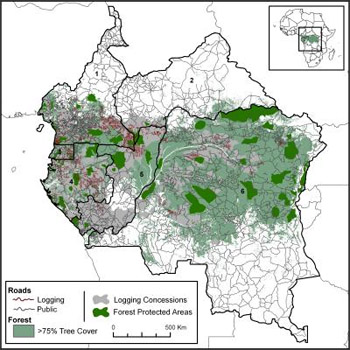
satellite images were used to map 4 million km². Credit: WHRC
https://landsat.gsfc.nasa.gov/landsat-helps-assess-impacts-of-industrial-logging-in-central-africa/
The implementation of designated logging areas throughout the Congo basin by USAID would initially suggest the reduction of logging throughout the area, however, John highlighted this control has only seen a 200% increase in logging throughout these designated areas.
This would initially suggest that these designated areas will become ‘dead zones’ for many future generations
What do the experts think?
John has spent his entire career trying to understand the exact implication of logging on the rainforest environment.
By studying abandoned areas of logging and documenting the regeneration rate of these areas, John and his team of researchers have uncovered something very surprising.

https://www.robblakers.com/pages/environmental-issues
The complete lack of competition between plant species in these logging areas allow for a rapid onset of regeneration. According to the team’s data, regeneration of these areas is well underway in the short time frame of approximately four years, thus contradicting the initial concept that logging creates intergenerational damage.
Infact, John mentioned that this practice could possibly allow for plant species that usually struggle to compete a chance to dominate specific areas. This suggests logging can actually contribute to rainforest biodiversity.
Lets keep logging to increase biodiversity
Unfortunately, although the data collected by John and his team suggests logging can contribute to biodiversity, and the damaged areas can regenerate quickly, there is still subsequent damage caused by the practice of logging.
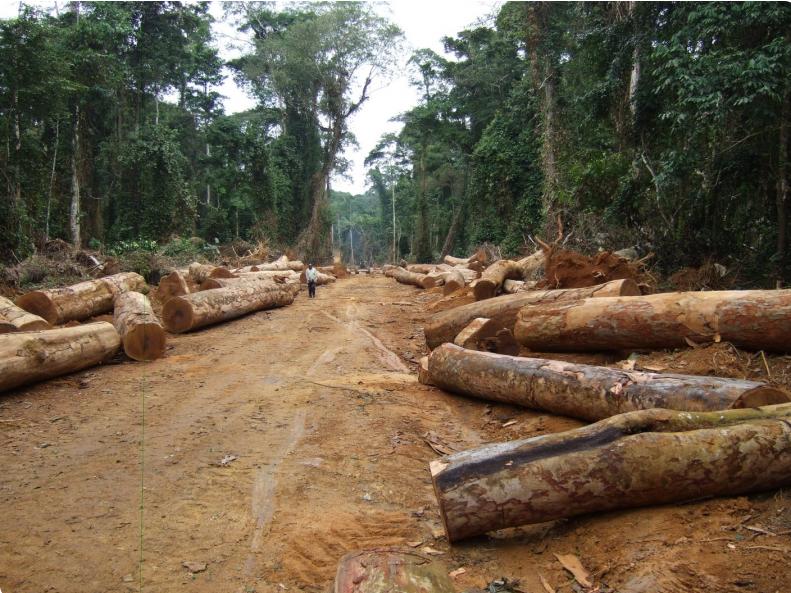
The roads that are created in and out of the logging areas were identified as the real problem with logging. These roads were shown to reduce carbon retention by the underlaying soil.
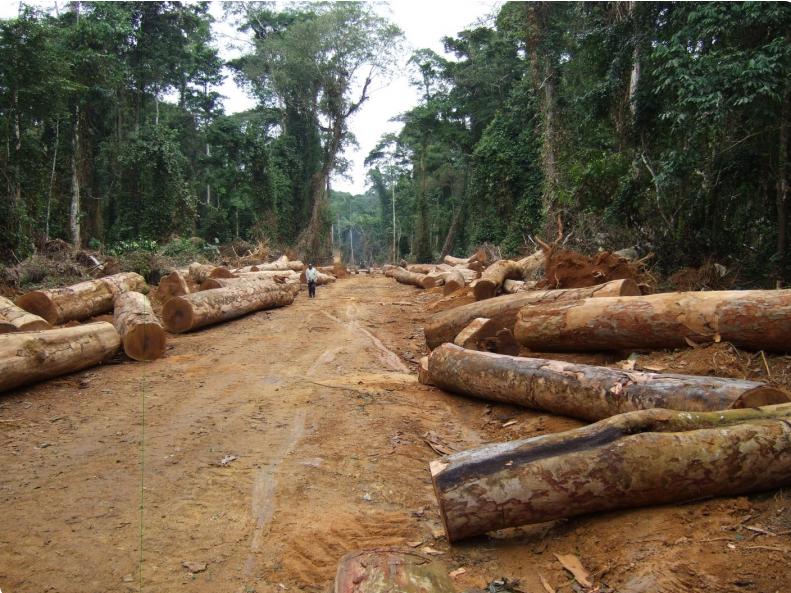
https://naturalscience.tech.blog/wp-content/uploads/2020/01/72ef8-logging.jpg
This was highlighted as a factor reducing generation time of logging roads and could possibly affect the ecology of many endemic species. In addition to this, the release of carbon from the soil can have serious effects in terms of climate change, which we all currently know is a serious issue.
However, by reusing the roads whenever possible, these risks can be reduced as the opening of new logging roads will open new areas to this problem.
In my opinion
This is very surprising as my lack of knowledge in this area has led me to adopt the belief of others that logging is bad practice for the environment.
This has taught me that information unsupported by evidence is merely opinion.
Also Johns ability to think outside the box has inspired me to do the same and not accept what is considered mainstream ideology. If there is no evidence it is an opinion.
I can see this having a considerable impact on the decisions I make throughout my career as by choosing to reject common belief my decisions can only be based on facts.
Friday 4th October 2019
 Alex's Blog